


You’re cruising down the highway, everything feels fine — and then a gust of wind hits, and suddenly your truck leans, drifts, or sways like it’s trying to change lanes on its own.
If you’ve felt this, you already know it’s unsettling. Your hands tighten on the wheel. You slow down a little. And you start wondering: is this normal, or is something wrong with my truck?
Here’s the honest answer: a little bit of wind sway is normal for trucks — but how much, and why it’s happening to your specific truck, depends on a few key factors. Let’s go through them.
Why Trucks Are More Affected by Wind Than Cars
This isn’t just in your head — trucks genuinely behave differently in wind than sedans or smaller cars, for some very physical reasons.
1. Larger surface area Trucks have a bigger, taller body — especially pickups with high cabs, trucks with toppers, or anything towing a trailer. More surface area means more wind force pushing against the vehicle.
2. Higher center of gravity Trucks typically sit higher off the ground than cars. A higher center of gravity makes a vehicle more prone to leaning or swaying when force is applied from the side.
3. Lighter rear end (especially pickups) If you’re driving an empty pickup truck, the rear axle often carries very little weight compared to a loaded one. Less weight on the rear tires means less grip and stability — making the back end more prone to drifting in wind.
4. Boxy aerodynamics Trucks aren’t as aerodynamically streamlined as cars. Flat surfaces (especially with a canopy, cap, or empty bed) catch wind more than a sloped sedan body would.
So yes — some sway in strong crosswinds is just physics. But excessive sway, especially in light-to-moderate wind, usually points to something else going on with your truck.
Normal vs Excessive Wind Sway — How to Tell the Difference
This is the question that actually matters. Here’s a simple way to think about it:
Likely normal:
- Mild side-to-side movement only during strong gusts (30+ mph winds)
- The truck corrects itself easily with small steering input
- It happens mainly when passing large trucks or in open, exposed areas (bridges, plains, canyons)
- Your truck is empty or lightly loaded (pickups sway more empty than loaded)
Likely a problem:
- Sway happens even in light wind or no wind at all
- You feel constant “wandering” — needing to correct steering frequently even on calm days
- The sway feels delayed or loose, like the truck takes a moment to respond to your steering correction
- It’s gotten noticeably worse over the past few weeks or months
- It happens alongside other symptoms — uneven tire wear, a vibrating steering wheel, or a “floaty” feeling over bumps
If you’re in the second category, it’s worth looking into the causes below.
Common Causes of Excessive Truck Sway
1. Worn or Underinflated Tires
This is the single most common — and most overlooked — cause.
Underinflated tires flex more, have less contact with the road, and respond more slowly to steering input. This makes the truck feel “loose” and harder to control in wind, even at normal speeds.
How to check: Check tire pressure when tires are cold (before driving), and compare to the recommended PSI on the sticker inside your driver’s door jamb — not the number on the tire itself. Underinflated tires are an easy, free fix that often makes a huge difference.
2. Worn Shocks or Struts
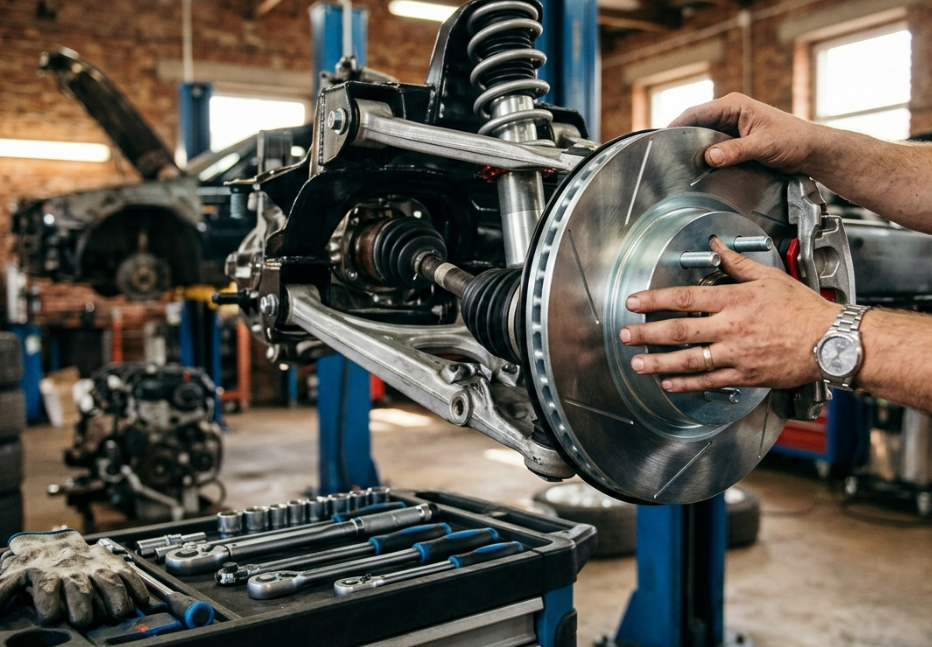
Shocks and struts control how your truck’s body moves in response to road and wind forces. When they wear out, your truck doesn’t settle back down quickly after being pushed — it keeps swaying or “floating” longer than it should.
How to check: Try the bounce test — push down firmly on the front bumper and let go. If the truck bounces more than once or twice before settling, your shocks may be worn.
3. Worn Sway Bar Links or Bushings
The sway bar (stabilizer bar) is specifically designed to reduce body lean — including the kind caused by wind. If the links or bushings connecting it are worn, the sway bar can’t do its job properly, and your truck leans more than it should.
How to check: A loose, clicking, or rattling sound over bumps often accompanies this issue (this is also the #1 cause of clunking noises over bumps — the two issues often show up together).
4. Unbalanced or Unevenly Worn Tires
If your tires are out of balance or worn unevenly, the truck can develop a subtle pull or wander that gets amplified by wind. It might feel fine on a calm day but noticeably worse with any crosswind.
How to check: Look at your tire tread — if one side is more worn than the other, or the wear looks “cupped” (wavy pattern), it’s a sign of balance or alignment issues.
5. Alignment Issues
Misaligned wheels mean your truck isn’t naturally tracking straight — it’s constantly being pulled slightly in one direction, even without wind. Add a gust of crosswind on top of that, and the sway becomes much more noticeable.
How to check: On a calm day, on an empty straight road, let go of the wheel briefly (only if safe to do so) — does the truck pull noticeably to one side? That’s a sign of alignment trouble.
6. Empty Truck Bed (Pickups Specifically)
If you drive a pickup truck and it’s empty, the rear end has very little weight pressing the tires into the road. This is one of the most common reasons pickups sway more than SUVs or cars in wind — there’s just less weight keeping the back end planted.
Fix: Some truck owners add weight to the bed (sandbags, weight blocks) specifically for this reason during windy seasons or long highway trips. It’s a simple, low-cost trick that genuinely helps.
Quick Diagnostic Table
| Symptom | Likely Cause |
|---|---|
| Sway only in strong gusts, truck corrects easily | Normal — likely just truck aerodynamics |
| Constant wandering, even with no wind | Alignment issue |
| Sway + bouncy/floaty feel over bumps | Worn shocks/struts |
| Sway + clunking noise over bumps | Sway bar links/bushings |
| Sway worse when truck bed is empty | Normal physics — add weight or adjust driving |
| Sway + uneven tire wear | Tire balance or alignment issue |
How to Reduce Truck Sway in Windy Conditions
While you’re getting any mechanical issues fixed, here are some practical driving tips for windy days:
Slow down. Wind force increases with speed — even 5–10 mph slower can noticeably reduce how much a gust affects your truck.
Increase following distance. This gives you more room to correct if a gust pushes you off your line.
Grip the wheel firmly but don’t overcorrect. A common mistake is over-steering in response to a gust, which can actually make the sway worse. Make small, controlled corrections.
Be extra cautious passing large trucks or on bridges. These create sudden wind changes — either from the truck’s wake or from open exposure — right when you’re most vulnerable to sway.
Check your tire pressure before long highway trips. This single step prevents a huge percentage of wind-related handling complaints.
When Should You Get It Checked by a Mechanic?
Get your truck inspected if:
- The sway feels like it’s getting worse over time
- You notice wandering even without wind
- There’s a clunking or rattling noise that accompanies the sway
- You feel vibration through the steering wheel
- Tire wear looks uneven when you inspect it
A mechanic can check alignment, suspension components, and tire condition in one visit — usually for the cost of a basic inspection, which is worth it if you’re driving long highway distances regularly.
Frequently Asked Questions
Q: Is it normal for a truck to sway in strong wind?
A: Yes, to some degree. Trucks have more surface area and a higher center of gravity than cars, making them naturally more affected by crosswinds. Mild sway that corrects easily with light steering input is generally normal.
Q: Why does my empty truck sway more than when it’s loaded?
A: An empty truck bed means less weight on the rear axle, which reduces tire grip and stability. This is a normal characteristic of pickup trucks and is why some drivers add weight to the bed for long highway trips or windy seasons.
Q: Can bad alignment cause my truck to sway in wind?
A: Yes. Misalignment means your truck isn’t tracking perfectly straight even without wind. Add a crosswind on top of that, and the sway becomes much more noticeable and harder to control.
Q: Will new tires fix truck sway in wind?
A: If your current tires are underinflated, unevenly worn, or out of balance, new (or properly maintained) tires can significantly reduce sway. If the tires are fine, the cause is more likely suspension or alignment related.
Q: Is truck sway in wind dangerous?
A: Mild sway that you can easily correct is not dangerous. However, if the sway is severe, sudden, or hard to control — especially at highway speeds — slow down immediately and get the truck inspected as soon as possible.
Q: Does adding weight to my truck bed really help with wind sway?
A: Yes, for pickup trucks specifically. Extra weight over the rear axle increases tire contact and stability, which is a well-known practical fix many truck owners use during windy conditions or long trips.
Final Thoughts
A little sway in strong crosswinds is just part of driving a truck — the physics are simply different from a car. But if you’re noticing sway in normal conditions, constant wandering, or sway paired with other symptoms like clunking or bouncing, it’s worth running through the checklist above.
Most causes — tire pressure, worn shocks, alignment — are inexpensive to check and fix, especially compared to the alternative of driving a truck that doesn’t feel fully in your control on the highway.
If you’ve checked tire pressure and everything still feels off, it’s time for a proper suspension and alignment inspection.