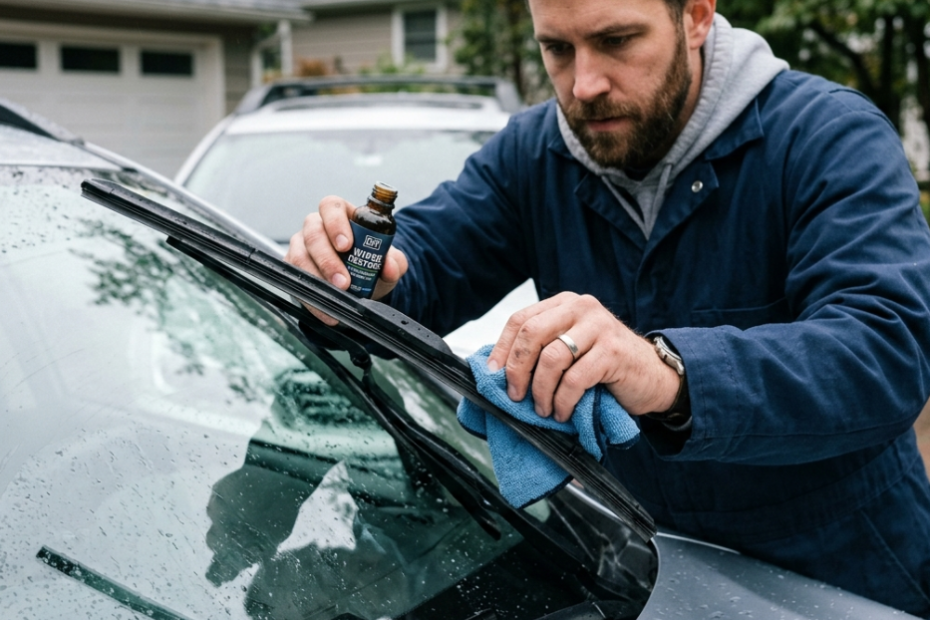
That sharp, annoying squeak every time your wipers drag across the windshield? You’re not alone — and you definitely don’t need to spend $80 at a garage to fix it.
In most cases, squeaky windshield wipers can be fixed in under 5 minutes, right in your driveway, with things you already own. This guide walks you through exactly why it happens and the 5 fastest fixes — starting with the easiest.
📋 What’s in this guide:
Why Do Windshield Wipers Squeak?
Before jumping to fixes, it helps to understand the root cause. Wiper blades are made of rubber — a material that needs a thin film of water to glide smoothly across glass. When that glide is interrupted, you get a squeak.
The most common reasons it happens:
- Dirty windshield or blades — grit and grime create friction
- Dry glass — wipers running with little to no water
- Low wiper fluid — not enough lubrication on the glass
- Worn-out rubber — old blades crack and lose flexibility
- Wrong wiper arm angle — blade hitting glass at the wrong pressure point
- Cold weather — rubber stiffens in freezing temperatures
Good news: most of these causes have a quick fix you can do yourself right now.
Fix 1: Clean Your Windshield (Takes ~2 Minutes)
This is the #1 cause of wiper squeaking — and most people skip it entirely. A dirty windshield means the rubber blade has to push through a layer of dust, road film, and dried bugs instead of gliding on clean glass.
What you need: Glass cleaner (Windex or similar) + microfiber cloth
How to do it:
- Spray glass cleaner across the full windshield
- Wipe in firm, circular motions with a dry microfiber cloth
- Pay extra attention to the area where the blades make contact
- Dry completely — don’t let it streak
Quick tip: Avoid using dish soap or household all-purpose cleaners — they can leave a residue that makes squeaking worse.
Fix 2: Clean the Wiper Blades Themselves (Takes ~2 Minutes)
Your windshield might be spotless, but if the rubber blade is coated in grime, you’ll still get that squeak. Dirt buildup on the blade creates uneven contact with the glass.
What you need: Warm soapy water + a clean rag or paper towels
How to do it:
- Lift the wiper arm away from the windshield so it locks upright
- Dip your rag in warm, soapy water
- Pinch the blade between your fingers and run the rag along the full length of the rubber
- Wipe both sides of the blade
- Keep going until the cloth comes away clean, not grey
- Lower the wiper back down gently — don’t let it snap back onto dry glass
Pro tip: You can also run the edge of the rubber blade gently with fine sandpaper (400 grit) to refresh the contact surface on older blades. This doesn’t always work, but it buys you a few extra months before replacement.
Fix 3: Top Up Your Wiper Fluid (Takes ~1 Minute)
This one gets overlooked all the time. Running your wipers on a dry or nearly dry windshield is like dragging rubber across sandpaper — it causes immediate squeaking and actually wears the blades down faster.
How to check and refill:
- Pop the hood and locate your wiper fluid reservoir (usually blue cap, often labeled with a windshield icon)
- Check the fluid level — it should be close to the “Max” line
- Top up with proper windshield washer fluid — not water alone, especially in winter (it’ll freeze)
Best wiper fluid choices by season:
- Spring/Summer: Standard washer fluid works fine
- Autumn: Bug-resistant or general-purpose fluid
- Winter (UK/Northern US): De-icing fluid — rated to at least -20°C or -4°F
Fix 4: Adjust the Wiper Arm Angle
Sometimes the squeak isn’t caused by the blade at all — it’s the wiper arm pressing at the wrong angle. If the arm is bent slightly (usually from someone cleaning under it or from age), the blade won’t sit flat against the glass and will skip and squeak.
How to check: Look at the wiper arm while the blade is resting on the windshield. The rubber should sit flush across the full length of the glass — no gaps, no tilting.
How to fix a bent wiper arm:
- Lift the wiper arm to the upright position
- Gently bend the metal arm slightly toward the windshield to increase contact pressure — or away from it if it’s pressing too hard
- Test with water — if the squeak is gone and the blade sweeps cleanly, you’re done
⚠️ Go slowly here. These arms are metal but they can crack if forced too aggressively.
Fix 5: Replace the Wiper Blades (Takes ~10 Minutes)
If you’ve tried everything above and the squeak is still there, the blades are simply worn out. Rubber degrades over time — it cracks, loses flexibility, and hardens. At that point, cleaning and adjusting won’t help. Replacement is the only real fix.
How often should you replace wiper blades? Most mechanics recommend every 12 months, but in harsh climates (heavy rain in the UK, freeze-thaw cycles in northern US states), 6–8 months is more realistic.
Signs it’s definitely time to replace:
- Squeaking continues even on a clean, wet windshield
- Blades leave streaks or smears instead of clearing cleanly
- Rubber looks cracked, chunky, or torn
- Blade skips or chatters across the glass
How to replace them (quick version):
- Check your car’s owner manual (or Google “[your car model] wiper blade size”) to find the correct blade length for your vehicle
- Lift the wiper arm upright until it locks
- Press the release tab on the underside of the blade where it connects to the arm
- Slide the old blade off and slide the new one on until it clicks
- Repeat for both blades — always replace both at the same time
Best budget picks for the USA: Bosch ICON, Rain-X Latitude, or Trico Flex
Best picks for UK drivers: Bosch Aerotwin or Valeo Silencio
When Should You Call a Mechanic Instead?
Honestly? Almost never for this specific problem. But there are a couple of situations where it’s worth getting a professional to take a look:
- The wiper motor sounds labored or grinding — that’s a motor issue, not a blade issue
- One arm isn’t moving in sync with the other — could be a linkage problem
- The arm is cracked or physically broken — a bent arm you can adjust yourself; a cracked one needs replacing
For standard squeaking caused by dirty blades, dry glass, or worn rubber? You’ve got everything you need to fix it yourself right now.
⚡ 5-Minute Fix: Quick Summary
- Clean your windshield with glass cleaner + microfiber cloth
- Clean your wiper blades with warm soapy water
- Top up wiper fluid — don’t run the wipers dry
- Check the wiper arm angle and bend gently if needed
- Replace blades if they’re older than 12 months or visibly cracked
Frequently Asked Questions
Why do my windshield wipers squeak when it’s not raining?
This usually means you’re running your wipers on a dry windshield. Without water as a lubricant, the rubber drags against the glass and squeaks. Only use your wipers when the glass is wet, or spray washer fluid first before switching them on.
Can I use WD-40 to stop wiper blades from squeaking?
No — do not use WD-40 on wiper blades. It’s a petroleum-based product that degrades rubber and will cause the blade to smear across your windshield. Stick to soapy water for cleaning, or use a purpose-made rubber conditioner if the blade is drying out.
Why do new wiper blades still squeak?
New blades sometimes squeak for the first few uses as the fresh rubber breaks in on the glass. This usually goes away on its own after a few rainy drives. If it persists, check that the wiper arm angle is correct and the blade is seated properly on the arm.
Do silicone wiper blades stop squeaking?
Yes — silicone blades are noticeably quieter than traditional rubber blades. They also last longer, handle extreme temperatures better, and coat the windshield with a water-repelling film over time. The trade-off is they cost a bit more upfront (typically $20–$35 per blade in the US).
How long should windshield wiper blades last?
Most rubber blades last around 12 months with normal use. Silicone blades can last 2–3 years. If you live somewhere with harsh winters or park your car outdoors year-round, plan to replace them on the shorter end of that range.
—
Squeaky wipers are one of those small car problems that are genuinely easy to fix yourself — no tools, no mechanic, no cost if you just need a cleaning. Work through the 5 fixes in order, and the noise should be gone before your next rainy commute.
Have a question about your specific car or wiper setup? Drop it in the comments below.